Black Anchor Pest ControlBlack Anchor Pest Control

Attic Sanitation and Insulation Restoration Dallas

When roof rats, squirrels, or raccoons breach Dallas homes along the wooded tracts of Lake Highlands or near the older tree canopies of Lakewood and Kessler Park, the attic space ceases to be a passive thermal barrier…
Get My Free Estimate →(945) 410-2468
Attic Sanitation and Insulation Restoration in Dallas, TX
Quick answer
  • Scope: Complete extraction of soiled insulation, thermal imaging assessment, specialized HEPA vacuuming of rodent or bat droppings, virucidal misting, and blown-in fiberglass or cellulose re-insulation to current building code.
  • Turnaround time: Most single-family Dallas attics require 1 to 2 business days depending on square footage, access openings, and contamination depth.
  • Investment range: Ballpark costs run between $1.50 and $3.50 per square foot of attic floor space, with a strict service minimum charge of $250 confirmed on-site.
  • Materials removed: Rodent feces, nesting materials, bio-fluid soiled batts, soiled loose-fill fiberglass, cellulose, and bat guano safely sealed in heavy-duty containment bags.
  • Booking protocol: Direct intake is scheduled by calling (945) 410-2468, followed by a formal on-site structural and contamination audit.

When roof rats, squirrels, or raccoons breach Dallas homes along the wooded tracts of Lake Highlands or near the older tree canopies of Lakewood and Kessler Park, the attic space ceases to be a passive thermal barrier and turns into a biological hazard zone. Rodents leave behind pheromone trails, urine deposits, and fecal droppings that permeate standard fiberglass batt and loose-fill cellulose materials. This organic contamination degrades thermal resistance (R-value) and continuously filters airborne pathogens into the living spaces through ceiling penetrations and recessed light fixtures. Routine spot-cleaning fails to remediate pheromone scent signatures that attract secondary colonies; complete remediation mandates structural stripping, antimicrobial fogging, and re-insulation.

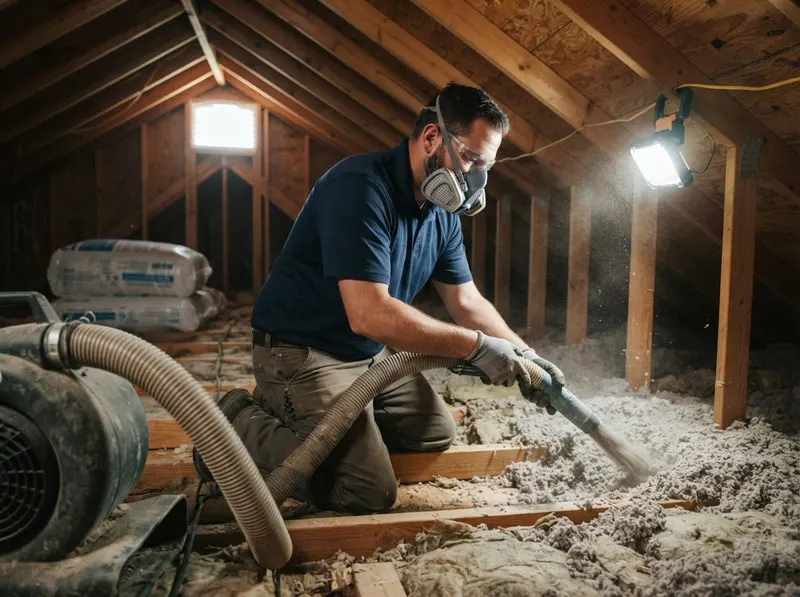
The process begins with localized containment. Technicians run heavy-duty negative-air collection hoses directly from the attic out to exterior collection tanks, preventing biological particulates from migrating into interior living areas. Blown-in fiberglass or blown cellulose is evacuated down to the bare ceiling drywall. Structural floor joists and roof decking in Preston Hollow and North Dallas residences undergo broad-spectrum enzyme treatments to neutralize leptospirosis, salmonella, and hantavirus risks. Air sealing closes every mechanical chase, top-plate junction, and plumbing stack with expanding polyurethane foam before fresh insulation is installed.

Thermal performance restoration adheres strictly to the International Energy Conservation Code (IECC) for Dallas County (Climate Zone 3), bringing depleted attics up to an R-38 standard (approximately 12 to 14 inches of depth depending on fill type). If a property has experienced localized rodent traffic isolated to a 10-foot utility line run, targeted mechanical patching and spot sanitation is an appropriate alternative to a total overhaul; however, when fecal distribution exceeds 20% of the insulation footprint or animal urine has saturated ceiling drywall, comprehensive restoration is necessary to permanently seal off scent attractants and eliminate recurring structural chew hazards.

Attic Sanitation and Insulation Restoration cost in Dallas

Minimum Service Base Charge (Localized Sanitization & Spot Repair)$250 minimum
Full Vacuum Removal of Contaminated Insulation (per sq. ft.)From $250
Antimicrobial Decontamination & Structural Odor Counteractant (per sq. ft.)From $250
Complete IECC Climate Zone 3 R-38 Re-Insulation (per sq. ft.)From $250
Comprehensive Attic Remediation & Re-Insulation (Average 1,500 sq. ft. Attic)$3,500 - $6,200

Every job gets a firm, written price after a free on-site visit.

Common questions

How does attic sanitation differ from standard pest extermination in Dallas?
Pest extermination in Dallas removes the living pests via trapping or baiting, whereas attic sanitation mechanically removes biological waste, eliminates pheromone trails, sanitizes wood framing, and replaces ruined insulation to secure structural hygiene.
What insulation R-value is required during an attic restoration in Dallas County?
Dallas County sits in Climate Zone 3, which requires a minimum thermal performance of R-38 for residential ceiling insulation, translating to roughly 13 inches of blown fiberglass or 10.5 inches of dense cellulose.
Will contaminated attic insulation cause odor problems inside an Oak Cliff or Uptown home?
Urine and fecal matter saturate ceiling sheetrock and enter conditioned rooms through the stack effect, meaning warm air escaping through attic fixtures draws microscopic contaminated particulates into the living quarters below.
Can blown-in insulation simply be added on top of rodent droppings in Dallas attics?
Capping old insulation over active biological waste traps urine and feces against ceiling framing, preserves pest pheromone trails that attract new rodents, and fails to remedy airborne bacterial exposure.
How long does the complete decontamination and restoration process take in Dallas?
A standard 1,200 to 2,000 square foot residential attic in Dallas requires 8 to 16 working hours, typically completed across 1 to 2 consecutive days using truck-mounted vacuum extractors.

Get started today

Tell us about your attic sanitation and insulation restoration job in Dallas and we'll send a clear, written quote, usually the same day.

Get your free Pest Control Service quote, Dallas

We only use your ZIP to check availability, no spam.